
Quick answer: Slimline pens are a practical first project, but their hardware, bushings and brass tube specifications must come from the exact manufacturer kit.
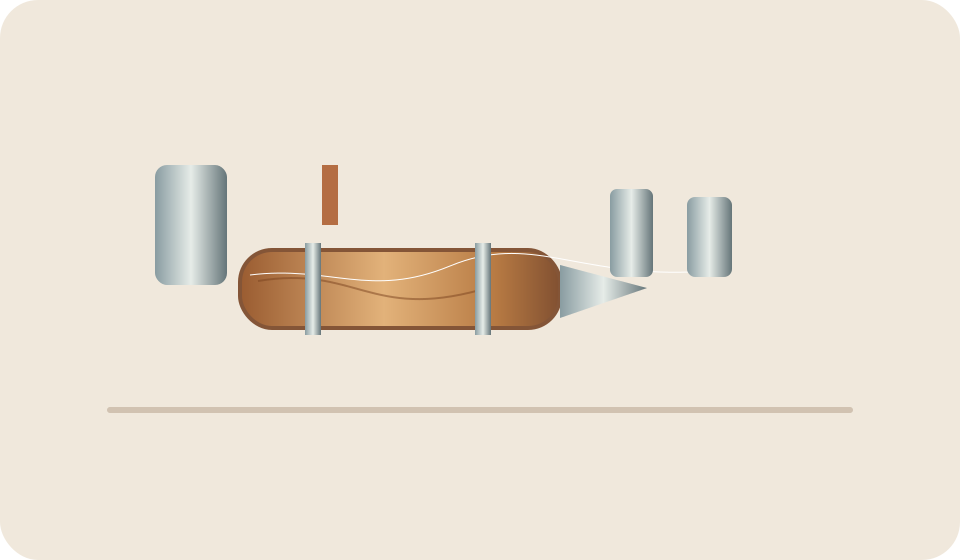
What is inside a Slimline pen kit
Rockler item 43420 is a useful documented example. The manufacturer lists a 7 mm drill and matching Slimline bushings for this specific kit. An instruction sheet is more reliable than treating every product in the category as dimensionally identical.
Bushing fit governs the shape
Mark the bushing packet with the pen kit part number. Keep worn bushings away from new matched sets. Experienced turners may use calipers to check the target dimensions, but a beginner should begin with the manufacturer-listed system rather than improvising a fit.
Drilling without splitting
After drilling, dry-check the brass tube clearance on scrap. A tight tube can split thin walls under insertion force; an oversized bore can leave an unreliable glue line. Cut the blank slightly long and trim flush only after the tube bond has fully cured.
Turning and finish
Choose a finish with the expected durability and instructions. A glossy CA finish has many process variables and a steep learning curve; it is not necessary for a first successful pen. Whatever finish you use, keep abrasive dust and finishing chemicals under control and never wrap materials around rotating parts.
Assembly and next steps
Once one Slimline pen works properly, changing blank species or finish is a useful second experiment. Moving immediately to complex, expensive hardware makes it harder to identify which step caused a problem.
The kit sheet controls four dimensions
Keep a labeled bag for each hardware family. A Slimline twist mechanism and a single-barrel rollerball can look related in shopping thumbnails yet require different lengths, tools and assembly pressure.
A beginner-friendly first batch
Make two pens from the same hardware specification with two different sound hardwoods. Keep the machine, drill, bushing and finish consistent. Comparing the results teaches the effect of grain without changing every variable. If both pens have the same gap near the center band, suspect the common squaring or bushing process rather than blaming both pieces of wood.
Sources and further verification
Source links are included to help you confirm equipment specifications, accessories and recommended safety practices. Specifications may change with product revisions.
- rockler.com — slimline pen hardware kit black chrome
- rockler.com — starter pen turning kit
- woodturner.org — Woodturner Woodturner Resources Safety Materials Safety.aspx
Relevant gear and supplies
Compare documented specifications and compatibility before following a shopping link.
Rockler Slimline Black Chrome Pen Kit
An accessible first two-barrel pen hardware style with clearly documented accessory needs.
Specs & buying guidance →Rockler Starter Pen Turning Kit
A documented accessory bundle if your lathe uses an MT2 arbor.
Specs & buying guidance →PSI PKMS2SET MT2 Mandrel Saver Package
An MT2 package for a user starting from no pen mandrel hardware.
Specs & buying guidance →